
Start Your Career: By the Numbers
Apply To This ProgramAdvancement
Choose from multiple program options to advance your career.
Variety
Find employment opportunities locally, statewide, nationally and internationally.
Be a Hero in Your Community
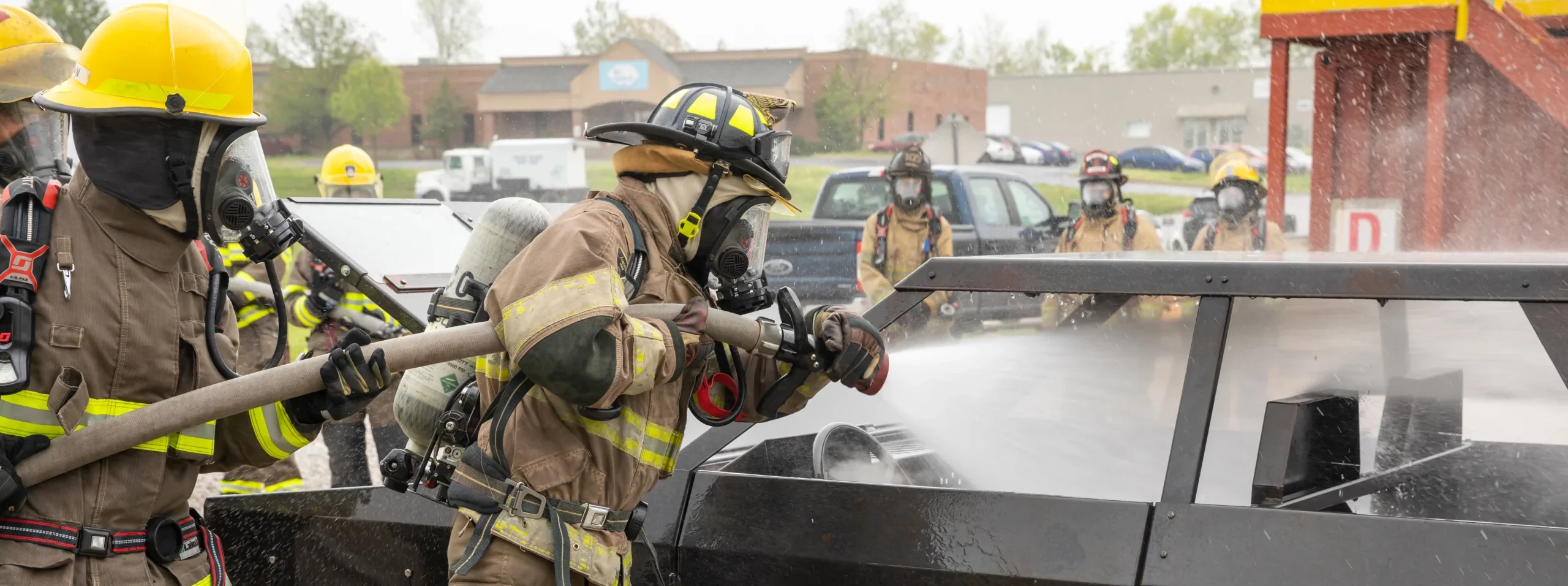
Want a job where you can help people every day? Firefighters and fire safety experts protect lives and property. At Ozarks Tech, you’ll build skills to enter a successful career in this exciting and important field.
The Fire Science program gives you the knowledge and skills to pursue multiple careers, including:
- Firefighter
- Fire Inspector
- Fire Investigator
- Fire Safety Specialist
Whether you’re just starting out or already working in fire services, there’s a program to match your experience and take you to the next step. You’ll learn important skills in classes like Fire Prevention, Fire Hydraulics, and Fire Protection Systems.
With nearly 100 fire departments in southwest Missouri, there are lots of job opportunities close to home — and even more across the country or around the world!
The associate degree is accredited by the International Fire Service Accreditation Congress (IFSAC), so you’ll graduate with a trusted and respected credential.
Program Information
Explore our accreditation information, find program contacts and learn more about how to apply to Ozarks Tech.
General Admissions to Ozarks Tech
Admission to Ozarks Technical Community College is open to all individuals who can benefit from its educational programs. A focus of the college mission is on the academic, career and personal goals of the student. OTC may admit you as a First-Time student just completing their high school, GED or HiSET requirements or as a Transfer student coming from another institution finishing up a certificate or degree. For more information, visit OTC Admissions.
Wondering how you’re going to pay for college? At OTC, we believe that cost shouldn’t be a barrier to earning a degree. Our staff will work with you to make a financial plan. To browse the resources available to you, see paying for college.
At Ozarks Tech, we want your transfer process to be easy. We accomplish this goal through articulation agreements. These agreements are an official partnership to match coursework between schools. This gives you a more seamless transition from Ozarks Tech to a four-year institution.
We have established an agreement for this program. This will simplify the transfer of your credits to partner schools. To understand how this degree will transfer, review the current articulation agreements. Be sure to consult with your transfer school to ensure you’re on the right path toward completing your four-year degree.
The associate degree is accredited by the International Fire Service Accreditation Congress (IFSAC),1723 West Tyler Avenue; Stillwater, OK 74078 405.744.8303 ifsac.org
The program’s next review will take place during the Fall 2025 semester.
OTC is accredited by the Higher Learning Commission (hlcommission.org), an accreditation agency recognized by the U.S. Department of Education. Our current accreditation status with the HLC is displayed on the page linked below. Our next comprehensive evaluation will be in 2030-2031. View more on OTC Accreditation.
The Goals of the Fire Science Technology program at Ozarks Technical Community College include:
- Encourage and promote excellence in teaching and scholarship by respecting the process of learning, believing in the importance of scholarly learning and the role of the student in the process.
- Increase student acceptance, recognition and realization of industry training standards.
- Increase student acceptance, recognition and realization of industry performance standards.
- Prepare graduates with workable skills using computer literacy, technical communication, critical thinking and problem solving skills.
The above goals feed into the Institutional Learning Outcomes of:
- Communication – Students will demonstrate effective communication skills, including listening, speaking and writing, in order to advance academically and professionally.
- Employability – Students will develop career competencies and self-management skills needed to gain employment in their chosen professions.
- Professionalism – Students will develop personal and professional relationships by demonstrating ethical behavior, collaborative work and constructive conflict resolution to promote success and advancement in their careers.
- Critical Reasoning – Students will demonstrate the ability to problem solve through the processes of analyzing, reflecting, reasoning and forming conclusions and judgments on a variety of math concepts, ideas, issues and information.
- Information Literacy – Students will demonstrate how to create, retrieve, organize and analyze information, including information from digital and technological sources.
- Cultural and Global Awareness – Students will demonstrate the ability to recognize and respect the impact of different cultures, ethnic groups and values on society and the interdependence of people around the globe.
Mission Statement
The mission of the Fire Science Technology program is to educate, train, and prepare students for employment, promotion and advancement in a firefighting career by providing opportunities to new and current firefighters thereby increasing their employment, promotional and advancement probability.
Program Outcomes
Graduate Student Learning Survey Results
Fire Science Technology Associate of Applied Science Degree
Missouri Economic Research and Information Center (MERIC) Occupational Outlook
- Fire Inspectors
- Missouri
- Occupational Grade: C+
- Typical Education Required: Postsecondary non-degree award
- Average Salary: $48,230
- Annual Growth: 2
- Annual Replacement Openings: 24
- Total Annual Openings: 26
- Ozark Region
- Occupational Grade: B+
- Typical Education Required: Postsecondary non-degree award
- Missouri
- Fire Investigators
- Missouri
- Occupational Grade: C+
- Typical Education Required: Postsecondary non-degree award
- Average Salary: $48,230
- Annual Growth: 2
- Annual Replacement Openings: 24
- Total Annual Openings: 26
- Ozark Region
- Occupational Grade: B+
- Typical Education Required: Postsecondary non-degree award
- Missouri
- Municipal Fire Fighting and Prevention Supervisors
- Missouri
- Occupational Grade: B
- Typical Education Required: Postsecondary non-degree award
- Average Salary: $72,270
- Annual Growth: 9
- Annual Replacement Openings: 66
- Total Annual Openings: 75
- Ozark Region
- Occupational Grade: B+
- Typical Education Required: Postsecondary non-degree award
- Average Salary: $64,358
- Annual Growth: 2
- Annual Replacement Openings: 5
- Total Annual Openings: 7
- Missouri
- Municipal Firefighters
- Missouri
- Occupational Grade: B
- Typical Education Required: Postsecondary non-degree award
- Average Salary: $49,250
- Annual Growth: 61
- Annual Replacement Openings: 464
- Total Annual Openings: 525
- Ozark Region
- Occupational Grade: B
- Typical Education Required: Postsecondary non-degree award
- Average Salary: $38,881
- Missouri
Fall to Fall Transferred Students – Unduplicated Fall to Fall Outcome
Top Transfer Destinations
- Dury University: 5
- Missouri State University: 4
- Crowder College: 3
- Columbia College Adult 8 WK Undergrad: 2
- East Central College: 2
- State Fair Community College: 2
- Avila University: 1
- College of the Ozarks: 1
- Liberty University: 1
- Moberly Area Community College: 1
- North Arkansas: 1
Top Transfer Destinations by Program
- Dury University
- Transfer Program: N/A
- Students: 3
- Crowder College
- Transfer Program: Paramedicine Certificate
- Students: 2
- East Central College
- Transfer Program: EMT – Paramedic
- Students:2
- Missouri State University
- Transfer Program: Not available
- Students: 2
- Avila University
- Transfer Program: Kinesiology (BS)
- Students 1
- College of the Ozarks
- Transfer Program: Fire Science
- Students: 1
- Columbia College Adult 8 WK Undergrad
- Transfer Program: Business Admin in Marketing
- Students: 1
Find Your Community
Getting involved is a great way to build connections and find your community on campus. With a variety of clubs and organizations and campus events it’s easy to find your people.
Thinking about earning your bachelor’s degree?
After your A.A.S., you may continue your education at a four-year institution. Bear in mind:
- Admission requirements vary
- Credits may transfer on a course-by-course basis
Course Information
Discover overview information, course sequences and specific course descriptions. Or, view the full catalog to see all the details.
Fire Science Technology (A.A.S.)
A.A.S. Degree: 63 Hours
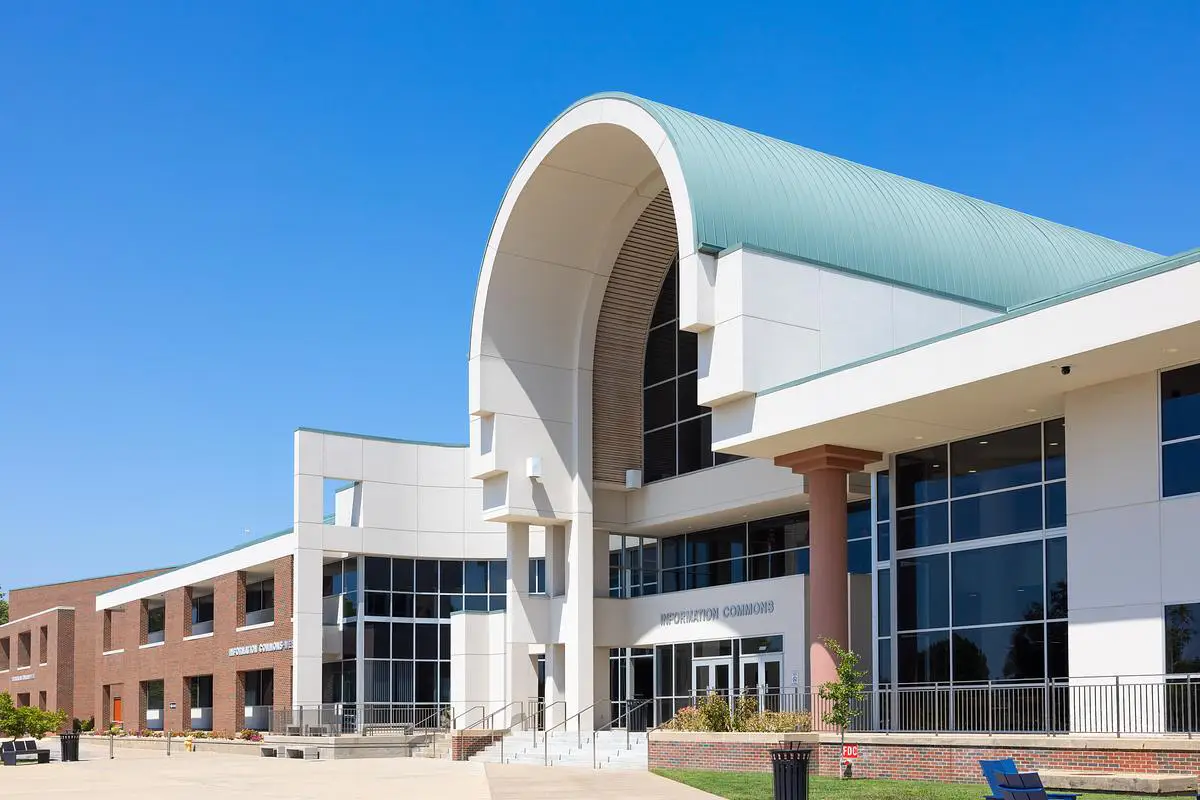
Location: Springfield Campus
Career departments, volunteer departments and departments with both career and volunteer firefighters combine to comprise approximately 100 fire departments throughout southwest Missouri. The Fire Science Technology program provides learning opportunities which introduce, develop and reinforce academic and occupational knowledge, skills and attitudes required for job acquisition, retention and advancement. Additionally, the program provides opportunities to retrain and upgrade present knowledge and skills. Career choices for Fire Science Technology students include the following: firefighter, fire inspector, fire instructor, fire investigator, fire protection systems installer, U.S. Forest Service, as well as various military branches. OTC graduates have employment opportunities locally, statewide, nationally and internationally. The program is accredited by the International Fire Service Accreditation Congress (IFSAC).
OTC has developed procedures for evaluating past training experiences and certification; inquiries should be directed to the lead instructor or department chair.
Students wishing to transfer to a four-year institution are strongly encouraged to seek the advice of the lead instructor or department chair of the FST program to determine courses appropriate for transfer.
This program is accredited by the International Fire Service Accreditation Congress (IFSAC), 1723 West Tyler Avenue, Stillwater, OK, 74078-8705 (405) 744-8303 https://ifsac.org/
Fundamental Firefighting Certificate
Certificate: 38 Hours
Location: Springfield Campus
Becoming a firefighter is a big commitment of time and service. On the most basic level, firefighters control and put out fires and respond to emergencies. Due to the wide range of duties involved in the job, firefighters must receive expert training to handle tasks such as connecting hoses and pumps, rescuing and treating the injured, writing reports on incidents and potential fire causes, educating the public about safety, conducting routine drills, and maintaining fire equipment. This certificate program addresses the foundational skills universal to all structural firefighters. Everyone must start with learning the Basics. Breaking that training into smaller “parts” can make it easier to fit the training into a busy schedule. While emergency services organization training requirements can vary from entity to entity, most public safety entities require all applicants to complete some post-secondary education and career training.
The Fundamental Firefighting Certificate program prepares students for employment, for entry into a formal undergraduate degree program, or qualifying the student for advancement in specific duties and organizational roles. The program concentrates on courses in the professional field without requiring students to complete a year or more of general education studies. The Fundamental Firefighting Certificate Program is a specially designed firefighting certificate for students wanting to pursue entry level opportunities as firefighters. OTC’s Fire Science Technology Program has developed a one-year certificate program that combines practical and classroom instruction into a nationally recognized certificate program. The education received in this program is applicable to the OTC Fire Science Technology A.A.S. degree program in fire science.
This program is accredited by the International Fire Service Accreditation Congress (IFSAC), 1723 West Tyler Avenue, Stillwater, OK, 74078-8705 (405) 744-8303 https://ifsac.org/
Locations Offered:
More Tools for Finding Your Path
Notices & Disclaimers
*Costs displayed are based on current tuition and fee rates for the program’s required credit hours, as approved by the OTC Board of Trustees, and are subject to change without notice. Estimates reflect both in-district and out-of-district residency rates. Actual costs, degree completion time, and credit requirements may vary based on residency, prior credits, elective courses, program updates, and enrollment factors. For additional information on attendance costs, visit Cost of Attendance, tuition and fees or contact us at 417-447-6900.
**Graduation rates vary by individual. For details on program enrollment, retention, exam/certification, and employment rates, visit Student Outcomes / Student Right-to-Know. Some careers on this list may require additional education and training. For program-specific accreditation visit OTC Accreditation.