
Start Your Career: By the Numbers
Apply To This ProgramPrepare for AHIMA national credentialing including RHIT, CCA, CCS, and CCS-P.
Information Drives Care
Curious about health care, but more interested in the tech and data side? Health Information Technology may be the path for you! Health Information Technicians (HITs) are essential members of the behind-the-scenes health care team. They manage vital databases that store patients’ medical and treatment records.
This two-year program prepares you with the skills you need to manage this data. In the first year you earn your coding certificate. Then, continue your training to broaden your career options with advanced skills in data analysis, privacy and security. You’ll build skills for:
-
Coding and classifying healthcare data
-
Analyzing health information for trends and accuracy
-
Protecting patient privacy and ensuring compliance
-
Managing and organizing healthcare data systems
- Maintaining and organizing medical records
At the end of the program, you will be eligible to take the AHIMA exam. This will qualify you as a registered health information technician (RHIT). You can find work in any institution that uses health information. Start your journey today and play a vital role in the healthcare industry.
Program Information
Explore our accreditation information and learn more about how to apply to Ozarks Tech
Health Information Technology Essential Functions
General Admissions to Ozarks Tech
Admission to Ozarks Technical Community College is open to all individuals who can benefit from its educational programs. A focus of the college mission is on the academic, career and personal goals of the student. OTC may admit you as a First-Time student just completing their high school, GED or HiSET requirements or as a Transfer student coming from another institution finishing up a certificate or degree. For more information, visit OTC Admissions.
Wondering how you’re going to pay for college? At OTC, we believe that cost shouldn’t be a barrier to earning a degree. Our staff will work with you to make a financial plan. To browse the resources available to you, see paying for college.
At Ozarks Tech, we want your transfer process to be easy. We accomplish this goal through articulation agreements. These agreements are an official partnership to match coursework between schools. This gives you a more seamless transition from Ozarks Tech to a four-year institution.
We have established an agreement for this program. This will simplify the transfer of your credits to partner schools. To understand how this degree will transfer, review the current articulation agreements. Be sure to consult with your transfer school to ensure you’re on the right path toward completing your four-year degree.
Denise Baer
Health Information Technology Program Director
417-447-8821
Accreditation

The Health Information Technology accreditor of Ozarks Technical Community College is the Commission on Accreditation for Health Informatics and Information Management Education (CAHIIM). The College’s accreditation for the Associates of Applied Science degree in Health Information Technology has been reaffirmed through 2029. All inquiries about the program’s accreditation status should be directed by mail to CAHIIM, 200 East Randolph Street, Suite 5100, Chicago, IL, 60601; by phone at (312) 235-3255; or by email at [email protected].
CAHIIM-accredited associate program graduates can take the Registered Health Information Technology exam and earn the RHIT Credential. Our program prepares our students for this well-recognized and essential credential. We are proud that our students exceed the AHIMA (American Health Information Management Association) credential standards each year.
OTC is accredited by the Higher Learning Commission (hlcommission.org), an accreditation agency recognized by the U.S. Department of Education. Our current accreditation status with the HLC is displayed on the page linked below. Our next comprehensive evaluation will be in 2030-2031. View more on OTC Accreditation.
Mission Statement
The Health Information Technology program provides accessible, high-quality technical education in health information management, designed to meet the needs of the communities it serves. Our mission statement is part of our strategic plan and aligns with the OTC Mission Statement.
Program Outcomes
Our Academic Year 2023-2024 Program Highlights:
- Employment rate is an impressive 100% as confirmed by our graduates’ feedback
- Students who sat for the RHIT Credential Exam demonstrated exceptional performance achieving an outstanding 92% first-time pass rate.
- Our graduation rates are 100% for full-time and 53% for part-time students.
Interested in learning more?
Watch an informational session video to learn more about the program.
Thinking about earning your bachelor’s degree?
After your A.A.S., you may continue your education at a four-year institution. Bear in mind:
- Admission requirements vary
- Credits may transfer on a course-by-course basis
Course Information
Discover overview information, course sequences and specific course descriptions. Or, view the full catalog to see all the details.
Health Information Technology (A.A.S.)*
A.A.S. Degree: 65 Hours
Health Information Technology is an Associate of Applied Science degree open admission program designed to lead to employment throughout the healthcare industry in hospitals, office-based physician practices, nursing homes, home health agencies, mental health facilities, public health agencies, pharmaceutical companies, law and insurance firms, and health product vendors. Graduates are eligible to apply to take the AHIMA certification examination for the Registered Health Information Technician (RHIT). AHIMA reserves the right to accept and approve each application and transcript.
The Health Information Technology program is accredited by the Commission on Accreditation for Health Informatics and Information Management Education (CAHIIM), 200 East Randolph Street, Suite 5100, Chicago, IL 60601 (312) 235-3255 https://www.cahiim.org/
A grade of “C” or better is required for all Health Information Technology Program required courses.
Health Information Technology Program Requirements – 44 Credit Hours
Health Information Technology Program Requirements – 44 Credit Hours
- HIT 110: Introduction to Health Information Technology
Introduction to Health Information Technology
This course offers an applied approach to health information concepts, guiding students through the essential principles of health information management. Students will explore how health information technology contributes to the effective management of healthcare data and supports the quality of care.
- HIT 120: Medical Coding I
Medical Coding I
This course introduces nomenclatures used with classification systems, a concurrent study of diseases and conditions typically encountered in hospital inpatient situations, correct sequencing of codes, and inpatient procedural coding. The primary focus is on inpatient coding rules and outpatient diagnosis coding using case scenarios.
Prerequisite(s): Grade of "C" or better in HIT 110, HIT 116, and HSC 120. - HIT 130: Health Information Technology Applications I
Health Information Technology Applications I
This course introduces common software applications used by health care professionals. This course provides a hands-on approach utilizing a variety of simulation software applications.
Prerequisite(s): Grade of "C" or better in HIT 110, HIT 116, HSC 120 - HIT 200: Comparative Health Records & Reimbursement Systems
Comparative Health Records & Reimbursement Systems
This course examines non-acute healthcare settings with the United States healthcare delivery system. Topics will include the organizational structures, accreditation, licensing requirements, documentation requirements, and the financing of healthcare services, including the influence of managed care. Emphasis will be on various payment and reimbursement methodologies and data sets, as well as the responsibilities of the health information professional.
Prerequisite(s): Grade of "C" or better in HIT 220, HIT 230, CIS 201, and MTH 128 or MTH 128S or MTH 129. - HIT 201: Healthcare Quality Management
Healthcare Quality Management
This course surveys the principles of quality management and performance improvement in healthcare. Concentrates on continuous quality improvement, case management, and risk management. Topics encompass the compilation, presentation, and analysis of healthcare data using graphic tools. Delving into screening criteria, stakeholders, and quality initiatives. The emphasis will be on abstracting and analysis skills in reporting clinical data.
Prerequisite(s): Grade of "C" or better in HIT 110 and CIS 201. - HIT 215: Health Information Systems
Health Information Systems
This course explores information systems in healthcare. The focus will be on the role, evolution, security, and selection of appropriate communication technologies and software applications. Topics will include database management, systems development life cycle, telecommunications, networks, exchange and compatibility standards, personal health records, and the electronic health record, along with an in-depth examination of current legislation and meaningful use. Emphasis on accurate data collection, storage, analysis, and reporting using electronic health record software.
Prerequisite(s): Grade of "C" or better in HIT 110 and CIS 201. - HIT 220: Medical Coding II
Medical Coding II
This course is a continuation of HIT 120 with an emphasis on advanced coding theory. The focus will be on ICD-10-CM/PCS and the role of medical coding in inpatient billing and reimbursement. Topics will include the sequencing of codes, validating code assignments, and resolving discrepancies between coded data and documentation. Emphasis will be on the quality of specific coding, MS-DRG reimbursement methodology, including coding compliance with federal reimbursement and reporting requirements.
Prerequisite(s): Grade of "C" or better in HIT 120. - HIT 230: Medical Coding III
Medical Coding III
This course introduces Current Procedural Terminology (CPT) and Healthcare Common Procedure Coding System (HCPCS) Level II. The focus will be on the role of procedure, service, and supply codes in billing and reimbursement and the process and management of the revenue cycle of health insurance claims. Topics will include concepts, principles, nomenclature, and application of classification systems in the outpatient setting. Emphasis will be on locating, applying, and understanding the reporting of medical services and procedures performed by physicians and outpatient facilities.
Prerequisite(s): Grade of "C" or better in HIT 120. - HIT 260: Legal Aspects of Healthcare
Legal Aspects of Healthcare
This course is an overview of legal and ethical issues affecting the healthcare industry, healthcare providers, and health information management professionals. Focus is on federal regulations, state laws, professional practice and ethical standards. Topics will include medical staff credentialing, tort law, judicial procedure, negligence and medical malpractice, corporate liability, contracts, access and disclosure of personal health information, informed consent, patient rights, and ethics. Emphasis will be on knowledge-based research skills and the procedures for safeguarding the privacy and confidentiality of health information.
Prerequisite(s): Grade of "C" or better in HIT 110 and CIS 101. - HIT 265: Health Information Technology Applications II
Health Information Technology Applications II
This course is a continuation of Health Information Technology Applications I with advanced practice utilizing coding software applications used by industry professionals.
Prerequisite(s): Grade of "C" or better in HIT 130, HIT 220, and HIT 230, - HIT 270: Healthcare Statistics
Healthcare Statistics
This course is a study of the basic descriptive, institutional, and clinical statistics in healthcare. The focus will be on transforming data into meaningful information in clinical and financial decision-making. Topics will include commonly computed rates and percentages, clinical indices, databases and registries, vital statistics, and knowledge-based research techniques. Emphasis will be on data selection, interpretation, and presentation skills.
Prerequisite(s): Grade of "C" or better in HIT 110, CIS 201, MTH 128, or MTH 128S, or MTH 129. - HIT 280: Organization and Supervision in Healthcare
Organization and Supervision in Healthcare
The primary focus is on applying the management functions of planning, organizing, directing, and controlling. Topics include data content and structure, informatics, analytics, research methodologies, and leadership and management; Emphasis will be on critical thinking, communication, and interpersonal skills.
Prerequisite(s): Grade of "C" or better in, HIT 215, HIT 260, HIT 270, and ENG 150. - HIT 285: Prof Practice Experience
Prof Practice Experience
This course is a culmination of the HIT program, focusing on competency in health information technology knowledge and skills, and preparing students for the American Health Information Technology’s Registered Health Information Technician (RHIT) credential exam.
Prerequisite(s): Complete with a grade of "C" or better in HIT 200, HIT 201, HIT 215, HIT 265, HIT 280. - HSC 120: Medical Terminology
Medical Terminology
This course introduces the basic word structure in medical terminology with an emphasis on word roots, prefixes, and suffixes using a body systems approach. Topics include conventional pathology, pharmacology, diagnostic and therapeutic procedures, surgical nomenclature, and abbreviations related to each body system. Includes applications and activities that reinforce word building, pronunciation, spelling, and medical terminology commonly used in healthcare.
General Education Requirements – 15 Credit Hours
General Education Requirements – 15 Credit Hours
The Missouri Department of Higher Education has identified a common set of general education courses that have been adopted statewide. These courses are called the “CORE 42.” CORE 42 courses are guaranteed to transfer to any Missouri public college or university to satisfy general education requirements.
Courses in knowledge areas below, designated with the CORE 42 logo indicates courses in that area have been evaluated and provided a MOTR number for transfer to all Missouri public institutions of higher education.
Courses that do not have this designation may still transfer to public and private colleges and universities in Missouri and elsewhere, but students are encouraged to check the transfer equivalency website of the institution to which they plan to transfer to confirm.
Please refer to the MDHE Core Transfer Curriculum for detailed information on CORE 42 courses.
Mathematical Sciences – 3 Credit Hours
Mathematical Sciences – 3 Credit Hours
- MTH 128: Contemporary Mathematics
Contemporary Mathematics
This course provides students with a basic survey of mathematics. Topics include problem solving, modeling, counting methods, probability, statistics and geometry.
- MTH 128S: Cont Mathematics with Support
Cont Mathematics with Support
This course provides students with a basic survey of mathematics. Topics include problem solving, modeling, counting methods, probability, statistics and geometry. MTH 128S will be driven by the same objectives as MTH 128, and satisfy the same requirement. The course design will provide students with more time, support, and individualized instruction to accomplish those objectives.
- MTH 129: Introductory Statistics
Introductory Statistics
This is the first course in statistics for students whose college and career paths require knowledge of the fundamentals of the collection, analysis, and interpretation of data. Topics include distributions, measures of central tendency and dispersion, elementary probability, sampling, estimation of parameters, hypothesis testing, regression and correlation.
Written Communications – 6 Credit Hours
Written Communications – 6 Credit Hours
- ENG 101: Composition I
Composition I
This course introduces students to college-level reading, thinking, and writing through a series of composition-rhetoric assignments and activities that culminate in a research-supported project. Specifically, students apply critical and creative thinking to evaluate problems, interpret evidence/data, and draw conclusions. As part of this process, students learn to evaluate sources and emerging digital tools for currency, feasibility, truthfulness, credibility, and accuracy. Ultimately, students learn to synthesize knowledge to solve problems. This writing process (thinking, researching, evaluating, and persuading) helps students to develop an essential skill set they can use in their future academic, civic, and professional lives.
or - ENG 100: Composition I With Support
Composition I With Support
This course introduces students to college-level reading, thinking, and writing through a series of composition-rhetoric assignments and activities that culminate in a research-supported project. Specifically, students apply critical and creative thinking to evaluate problems, interpret evidence/data, and draw conclusions. As part of this process, students learn to evaluate sources and emerging digital tools for currency, feasibility, truthfulness, credibility, and accuracy. Ultimately, students learn to synthesize knowledge to solve problems. This writing process (thinking, researching, evaluating, and persuading) helps students to develop an essential skill set they can use in their future academic, civic, and professional lives. English 100 will be driven by the same course objectives as English 101 and satisfy the same requirement.
- ENG 101: Composition I
- ENG 150: Technical Writing
Technical Writing
This course emphasizes developing the student’s ability to write clearly, concisely and accurately. Students practice collecting, analyzing, interpreting and presenting information in a variety of technical documents used in professional settings while using proper research and documentation techniques, sound visual design principles and effective writing styles suitable for a specific communicative context. Throughout, emphasis will be placed on honing skills in audience analysis, analytical reading, critical thinking, research methods and clear writing.
Prerequisite(s): ENG 100 or ENG 101.
Natural Sciences – 3 Credit Hours
Natural Sciences – 3 Credit Hours
- HIT 116: Human Anatomy Phys & Patho
Human Anatomy Phys & Patho
This course will cover fundamental concepts of anatomy and physiology, including the relationship between structure and function and how diseases impact body systems. Students will gain an understanding of how various body systems contribute to maintaining homeostasis.
Social and Behavioral Sciences – 3 Credit Hours
Social and Behavioral Sciences – 3 Credit Hours
- PLS 101: American Government and Politics
American Government and Politics
This introductory course familiarizes students with American and Missouri government constitutions, institutions, policies and processes. Students develop an understanding of the foundations, environment, and principles of democracy with key concepts about voting, political parties, campaigns, and interactions between the branches of government. The course emphasis is on the values, rights, and responsiblities that shape public decision making of active and informed citizens in the American political system. This course meets instruction requirements (Missouri Revised Statute 170.011.1) in the Constitution of the United States and the state of Missouri.
- HST 120: U.S. History I: to 1865
U.S. History I: to 1865
This course is a survey of the history of the United States from pre-Columbian societies through the Civil War, including formative political, social, economic and cultural developments. It also introduces students to history as an academic discipline and requires analysis, synthesis and evaluation of primary and secondary materials in reading, discussion and writing. HST 120 will satisfy the Missouri state law requiring instruction in the United States and Missouri Constitutions.
- HST 130: U.S. History II: 1865-Present
U.S. History II: 1865-Present
This course is a survey of the history of the United States from Reconstruction to the present, covering the political, economic, social and cultural developments that have shaped modern America. It introduces students to history as an academic discipline and requires analysis, synthesis and evaluation of primary and secondary materials in reading, discussion and writing. HST 130 will satisfy the Missouri state law requiring instruction in the United States and Missouri Constitutions.
Program Specific Courses – 6 Credit Hours
Program Specific Courses – 6 Credit Hours
- CIS 101: Technology & Digital Literacy
Technology & Digital Literacy
This course provides an overview of digital literacy topics such as computer hardware, software, programming, security, safety, and information systems. This is a “hands-on” class learning to use the most common computer software programs and information resources facilities. This course provides a look at the structure and components of computers, their operating systems, and an introduction to various applications with emphasis on word processing, spreadsheet applications, presentation software, and Internet usage.
Prerequisite(s): Keyboarding skill of 25 WPM or BUS 101 or CIS 100 recommended. - CIS 201: Computer Apps for Business
Computer Apps for Business
This course provides a “hands-on” use of electronic spreadsheets and database application software. Students will design, test, and debug spreadsheet applications and implement databases. This course will demonstrate why spreadsheets and databases are valuable when making business decisions and provide an overview of how to solve problems in these applications. Upon successful completion of the course, students will have the knowledge and skills to determine how to use spreadsheets and databases effectively in further college courses and a business environment.
Prerequisite(s): CIS 101
Health Information Technology Certificate – Coding*
Certificate: 33 Hours
The Health Information Technology Certificate represents coding training that includes; anatomy and physiology, pathophysiology, pharmacology, medical terminology, reimbursement methodology, intermediate/advanced ICD diagnostic/procedural, and CPT coding as required by the American Health Information Management Association (AHIMA) for national certification.
Students who complete this certificate are eligible to sit for the national coding credential exam CCS (Certified Coding Specialist) or CCS-P (Certified Coding Specialist-Physician-based) administered by the American Health Information Management Association (AHIMA).
National certification can lead to employment in the healthcare industry by obtaining the knowledge and skills to become a qualified coder. Areas of employment for coders are generally hospitals (outpatient and inpatient), physician offices, group practices, multi-specialty clinics, and specialty centers.
The Health Information Technology program is accredited by the Commission on Accreditation for Health Informatics and Information Management Education (CAHIIM), 200 East Randolph Street, Suite 5100, Chicago, IL 60601 (312) 235-3255 https://www.cahiim.org/
A grade of “C” or better is required for all Health Information Technology Certificate – Coding Program required courses.
Health Information Technology Certificate – Coding Requirements
Health Information Technology Certificate – Coding Requirements
- CIS 101: Technology & Digital Literacy
Technology & Digital Literacy
This course provides an overview of digital literacy topics such as computer hardware, software, programming, security, safety, and information systems. This is a “hands-on” class learning to use the most common computer software programs and information resources facilities. This course provides a look at the structure and components of computers, their operating systems, and an introduction to various applications with emphasis on word processing, spreadsheet applications, presentation software, and Internet usage.
Prerequisite(s): Keyboarding skill of 25 WPM or BUS 101 or CIS 100 recommended. - ENG 100: Composition I With Support
Composition I With Support
This course introduces students to college-level reading, thinking, and writing through a series of composition-rhetoric assignments and activities that culminate in a research-supported project. Specifically, students apply critical and creative thinking to evaluate problems, interpret evidence/data, and draw conclusions. As part of this process, students learn to evaluate sources and emerging digital tools for currency, feasibility, truthfulness, credibility, and accuracy. Ultimately, students learn to synthesize knowledge to solve problems. This writing process (thinking, researching, evaluating, and persuading) helps students to develop an essential skill set they can use in their future academic, civic, and professional lives. English 100 will be driven by the same course objectives as English 101 and satisfy the same requirement.
or - ENG 101: Composition I
Composition I
This course introduces students to college-level reading, thinking, and writing through a series of composition-rhetoric assignments and activities that culminate in a research-supported project. Specifically, students apply critical and creative thinking to evaluate problems, interpret evidence/data, and draw conclusions. As part of this process, students learn to evaluate sources and emerging digital tools for currency, feasibility, truthfulness, credibility, and accuracy. Ultimately, students learn to synthesize knowledge to solve problems. This writing process (thinking, researching, evaluating, and persuading) helps students to develop an essential skill set they can use in their future academic, civic, and professional lives.
- ENG 100: Composition I With Support
- HIT 110: Introduction to Health Information Technology
Introduction to Health Information Technology
This course offers an applied approach to health information concepts, guiding students through the essential principles of health information management. Students will explore how health information technology contributes to the effective management of healthcare data and supports the quality of care.
- HIT 116: Human Anatomy Phys & Patho
Human Anatomy Phys & Patho
This course will cover fundamental concepts of anatomy and physiology, including the relationship between structure and function and how diseases impact body systems. Students will gain an understanding of how various body systems contribute to maintaining homeostasis.
- HSC 120: Medical Terminology
Medical Terminology
This course introduces the basic word structure in medical terminology with an emphasis on word roots, prefixes, and suffixes using a body systems approach. Topics include conventional pathology, pharmacology, diagnostic and therapeutic procedures, surgical nomenclature, and abbreviations related to each body system. Includes applications and activities that reinforce word building, pronunciation, spelling, and medical terminology commonly used in healthcare.
- HIT 120: Medical Coding I
Medical Coding I
This course introduces nomenclatures used with classification systems, a concurrent study of diseases and conditions typically encountered in hospital inpatient situations, correct sequencing of codes, and inpatient procedural coding. The primary focus is on inpatient coding rules and outpatient diagnosis coding using case scenarios.
Prerequisite(s): Grade of "C" or better in HIT 110, HIT 116, and HSC 120. - HIT 130: Health Information Technology Applications I
Health Information Technology Applications I
This course introduces common software applications used by health care professionals. This course provides a hands-on approach utilizing a variety of simulation software applications.
Prerequisite(s): Grade of "C" or better in HIT 110, HIT 116, HSC 120 - HIT 220: Medical Coding II
Medical Coding II
This course is a continuation of HIT 120 with an emphasis on advanced coding theory. The focus will be on ICD-10-CM/PCS and the role of medical coding in inpatient billing and reimbursement. Topics will include the sequencing of codes, validating code assignments, and resolving discrepancies between coded data and documentation. Emphasis will be on the quality of specific coding, MS-DRG reimbursement methodology, including coding compliance with federal reimbursement and reporting requirements.
Prerequisite(s): Grade of "C" or better in HIT 120. - HIT 230: Medical Coding III
Medical Coding III
This course introduces Current Procedural Terminology (CPT) and Healthcare Common Procedure Coding System (HCPCS) Level II. The focus will be on the role of procedure, service, and supply codes in billing and reimbursement and the process and management of the revenue cycle of health insurance claims. Topics will include concepts, principles, nomenclature, and application of classification systems in the outpatient setting. Emphasis will be on locating, applying, and understanding the reporting of medical services and procedures performed by physicians and outpatient facilities.
Prerequisite(s): Grade of "C" or better in HIT 120. - HIT 265: Health Information Technology Applications II
Health Information Technology Applications II
This course is a continuation of Health Information Technology Applications I with advanced practice utilizing coding software applications used by industry professionals.
Prerequisite(s): Grade of "C" or better in HIT 130, HIT 220, and HIT 230,
Frequently Asked Questions
HIT has a demanding curriculum to assist student success in future career goals. In HIT courses a 75% (“C”) or better is considered passing.
The HIT 285 Professional Practice Experience is the cumulation of the student’s hard work—this course’s primary purpose is to facilitate supervised field-based learning in affiliated healthcare and healthcare-related agencies. HIT 285 is taken in the last semester of the HIT program and is available only in the Fall and Spring semesters.
Students must pass all other HIT courses with a grade of ‘C’ or higher and have a minimum cumulative GPA of 2.50.
In this course, students will:
- Review AHIMA Domains to reinforce HIT knowledge.
- Take a Comprehensive Program Exam to assess the retention of student knowledge.
- Complete a 40-hour professional practice experience (one 8-hour day for five weeks).
- Clinic sites are assigned by the instructor to students who live within 60 miles of the Springfield OTC campus.
- Students who reside more than 60 miles outside the Springfield OTC campus will be required to find their clinic site.
- Information will be provided to assist students in their search for a clinic site.
- If a student cannot find a clinic site, they may not be able to participate in HIT 285 since the professional practice experience is essential to this course.
- Participate in a Criminal Background Check and Random Drug Test (included in course student fees)
- Ensure required immunizations are complete (student responsibility cost).
- Become an AHIMA student member (student responsibility cost- find AHIMA membership information here).
Locations Offered:
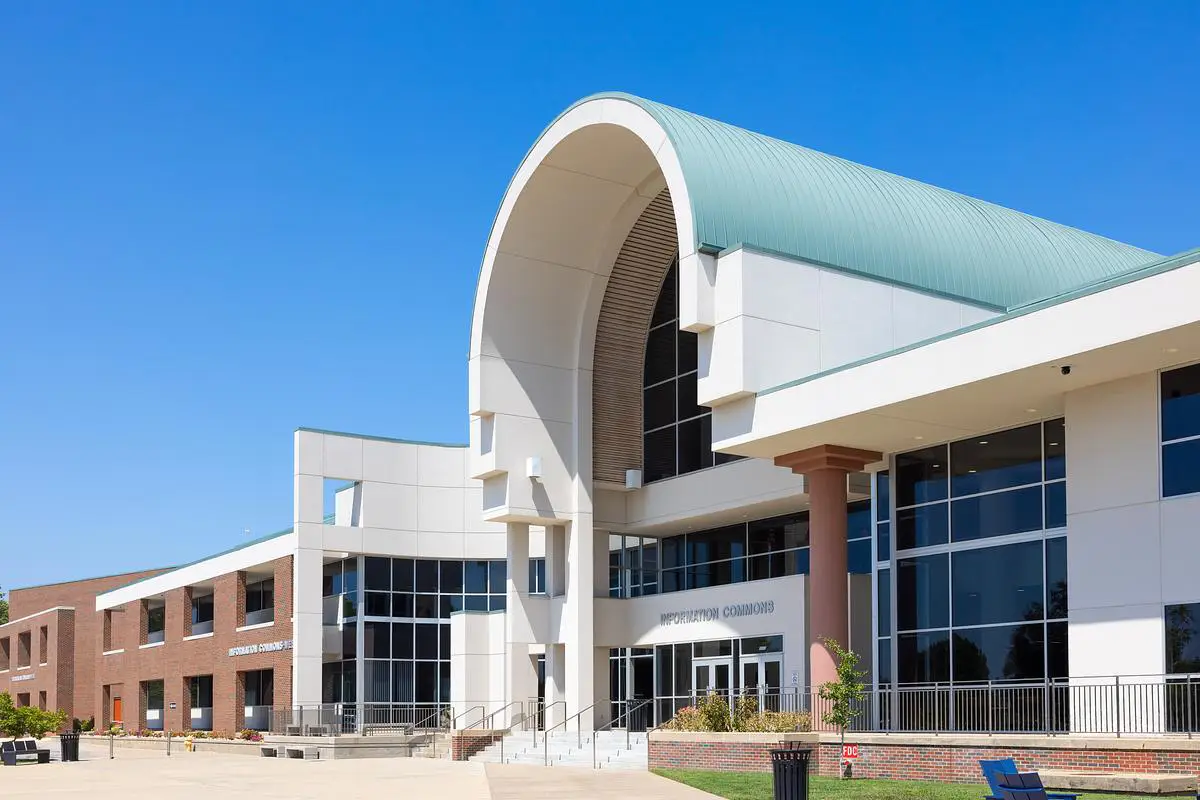
Some options available online.
More Tools for Finding Your Path
Notices & Disclaimers
*Costs displayed are based on current tuition and fee rates for the program’s required credit hours, as approved by the OTC Board of Trustees, and are subject to change without notice. Estimates reflect both in-district and out-of-district residency rates. Actual costs, degree completion time, and credit requirements may vary based on residency, prior credits, elective courses, program updates, and enrollment factors. For additional information on attendance costs, visit Cost of Attendance, tuition and fees or contact us at 417-447-6900.
**Graduation rates vary by individual. For details on program enrollment, retention, exam/certification, and employment rates, visit Student Outcomes / Student Right-to-Know. Some careers on this list may require additional education and training. For program-specific accreditation visit OTC Accreditation.